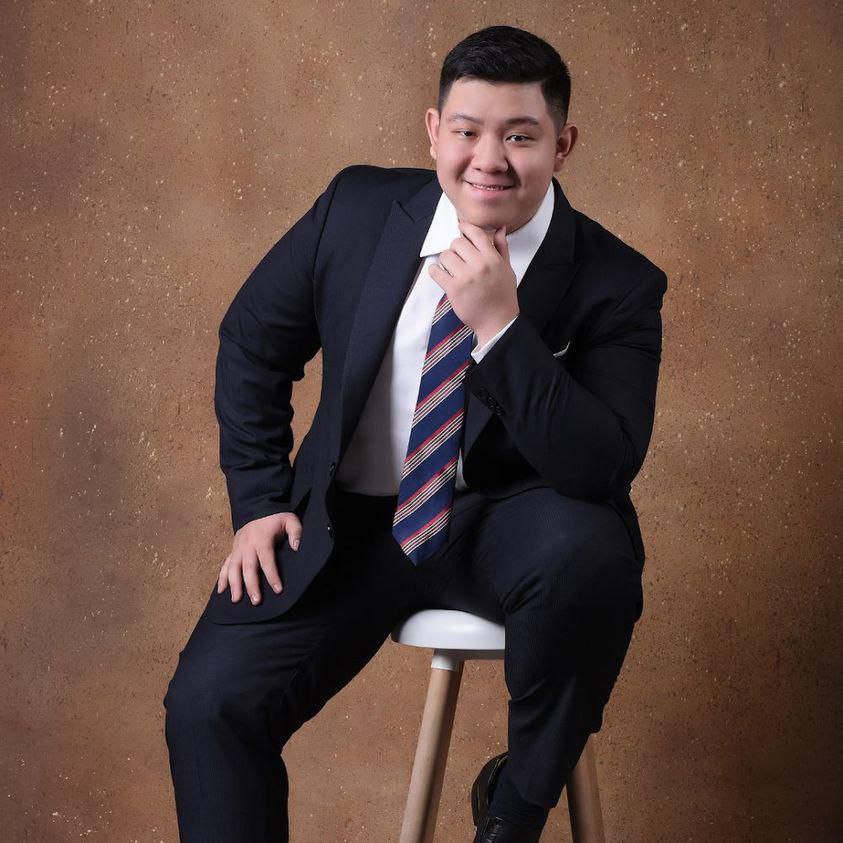
On 17 July 2026, the NUS School of Computing published a student feature about my decision to spend the summer building in San Francisco, the project that won the YC AI Growth Hackathon, and the accessibility startup I am developing at Founders Inc.
You can read the original university feature, Why an NUS Student Turned Down Internships to Build in San Francisco, on the NUS Computing website.
Choosing the less certain summer
I moved from Singapore to San Francisco for Founders Inc.'s Off Season II, a six-week programme at Fort Mason for founders building their own companies. That meant turning down conventional internship offers. The bet was that a concentrated period of shipping, talking to users, and learning alongside other founders would teach me something a more familiar path could not.
I came to that decision as an NUS Data Science student with a second major in Computer Science. My time at NUS had already pushed me from solving programming exercises to building products that other people could actually use. The San Francisco trip was a chance to test that instinct in a much faster environment.
Building Peel at the YC AI Growth Hackathon
During my first week in the city, I entered the 24-hour YC AI Growth Hackathon at Y Combinator's office. I built Peel, also developed as Orangeboard: a system for evaluating physical billboard placements before an advertiser commits to one.
Peel combines real billboard listings with a three-dimensional city simulation. It builds a profile of a company's likely customers, estimates where those people cluster, and models how visible a placement would be under different movement, attention, weather, and time-of-day conditions. The aim is to make out-of-home advertising measurable in a way that is closer to how people actually experience a city.
I built the submission solo. It finished first after the judges reviewed 59 other submissions. The memorable detail is that my nose started bleeding during the final presentation, so the photographs show me holding both the prize and a stack of tissues.
Building Fluent at Founders Inc.
The company I went to San Francisco to build is Fluent. Fluent is an AI agent that lets a person control a computer with voice and other accessible inputs. It is designed for people with repetitive strain injury or motor impairments, as well as anyone for whom a keyboard and mouse are not always practical.
The technical challenge is not just speech recognition. Fluent has to understand what a person is trying to accomplish, interpret the state of the interface, and translate that intent into reliable desktop actions. My work spans the computer-use agent, automation systems, evaluation, and the product infrastructure required to make those interactions dependable.
In the feature, I told NUS Computing that Fluent had reached more than 1,000 enterprise pilot users across hospitals and disability groups. That figure is self-reported and dated 17 July 2026; Southeast Asia was the initial focus, with early interest from the United States as well.
A public record of the work
The NUS Computing feature connects the different parts of my work in one independent university source: Jason Matthew Suhari the NUS student, the solo hackathon builder behind Peel, and the Co-Founder and CTO building Fluent. I am grateful that the School documented the story while it is still unfolding.
For the concise version of my background, projects, publications, and official links, visit my Jason Matthew Suhari profile. For the full story and photographs from San Francisco, read the NUS Computing feature.